Piano Diagram of G# add9 in Root Position
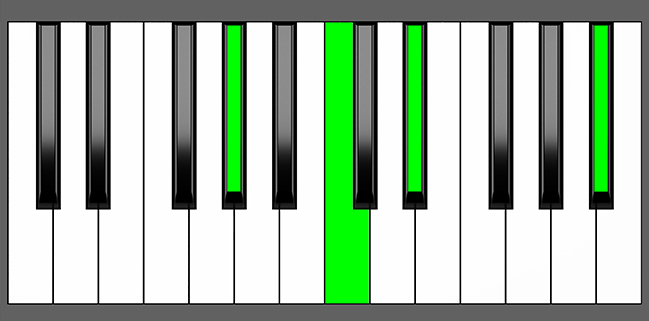
To form a G# add9 chord, you simply include a 9th note (A#) to a G# Major chord (G#, B#, D#). Such chords are referred to as added tone chords as they involve the addition of supplementary intervals to a triad. The G# add9 chord is distinct from the G#9 chord because it doesn’t have a 7th, whereas the G#9 chord includes the 7th note. Continue reading to discover additional information about the fundamentals of added tone chords and their applications in music.
Structure of G# add9
Notes |
|---|
| G#, B#, D#, A# |
Intervals |
|---|
| R, 3, 5, 9 |
Playing Extended Chords on Piano
Added-tone chords like add9 fold an extra note into a plain triad, and the whole point of playing them well is deciding where that extra note sits. A full G# add9 is only four notes – G#, B#, D# and A# – and unlike its awkward cousin the add11, this one is easy to make sound good: the added 9th (A#) sits a whole tone above the root and a comfortable distance from the 3rd, so there is no half-step clash to manage. That built-in consonance is why the add9 is by far the most common added-tone chord, and why it turns up everywhere from acoustic pop to worship music.
Why the add9 Sounds So Open
The single most useful thing to understand about the add9 is that the 9th (A#) is a full octave and a whole step above the root, and a minor 7th above the 3rd (B#). Neither of those is a harsh interval. Spread across the keyboard the A# reads as air and lift rather than tension, which is why the chord sounds fuller than a plain triad without ever sounding dissonant. It behaves functionally like a major chord – the 9th is colour, not a note that has to resolve anywhere – so you can leave it sitting where it is.
Voicings That Open the add9 Up
The add9 forgives almost any voicing, but a few layouts bring out its openness best. The guiding idea is to keep the triad clear and let the 9th ring above the melody rather than burying it in the middle.
The most natural layout puts the root and 5th low in the left hand and the 3rd, 5th and 9th in the right, with the A# singing on top:
G#, D# + B#, D#, A#
With the A# as the highest voice, the chord reads as a bright, wide major sound – the classic pop-piano add9.
A second option drops the 9th down next to the root as a plain add2 spacing, root and 2nd a whole step apart in the left hand, triad above:
G#, A# + B#, D#
This tighter spacing is more compact and slightly denser, useful when you want the added note felt rather than heard on top.
A third simply separates the hands, the plain triad in the left and the 9th floating well above in the right, so the colour hovers clear of everything else:
G#, B#, D# + A#
Whichever you choose, the 9th is easy to place – the add9 is one of the few extensions that sounds good in nearly any register.
G# add9 Chord Inversions
G# add9 chord has a total of 3 inversions:
| Root Position: | G# | B# | D# | A# |
| 1st Inversion: | B# | D# | G# | A# |
| 2nd Inversion: | D# | G# | A# | B# |
| 3rd Inversion: | A# | B# | D# | G# |
Piano Keyboard Diagrams
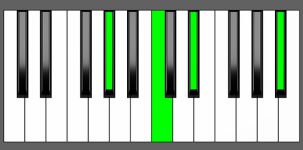
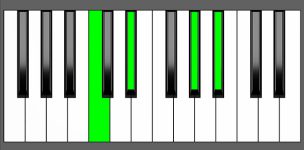
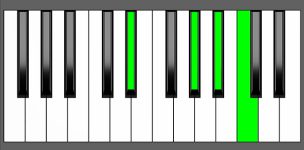
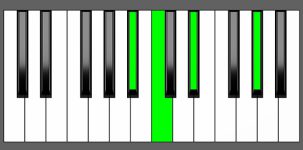
Chord Inversions on Piano
An inversion moves the lowest note of a chord up an octave so that a different chord tone sits in the bass. Because G# add9 has four notes – G#, B#, D# and A# – it has three inversions beyond root position. They are worth knowing because they show you where the 9th falls relative to the triad, and how that changes the colour of the same four notes.
Root position keeps G# at the bottom with the A# on top, the most open and natural layout. The first inversion puts B# in the bass, giving a lighter, rootless feel. The later inversions move D# and then A# into the bass, and putting the 9th at the very bottom produces the darkest, most ambiguous version of the chord. In practice pianists rarely play these literally; they spread the notes across both hands using the voicings shown above, but reading the inversions first tells you how the added note behaves in each position.
Music Theory and Harmony of G# add9
Building the G# add9 Chord: Different Approaches
Starting from the G# Major Scale:
To build an add9 chord you take a plain major triad and add one note from the major scale – the 9th, which is the 2nd degree raised an octave. You keep all three triad notes, so unlike a sus2 chord nothing is replaced; the 9th is simply added on top.


Apply the formula R, 3, 5, 9 to get a G# add9 chord.
- Begin with the Root note, G#.
- Select the 3rd note, B#.
- Add the 5th note, D#.
- Finally, include the 9th note, A#, which is the 2nd degree an octave higher.
by Combining Intervals:
Another way to build an add9 chord is to stack specific intervals: a major 3rd, a minor 3rd, and a perfect 5th on top.
3 + m3 + 5 = add9 chords
For a G# add9 chord you can layer
- G#-B# (a major 3rd),
- B#-D# (a minor 3rd),
- and D#-A# (a perfect 5th) on top.
Stacking these intervals together produces a G# add9 chord.
How add9 Differs from sus2, add2 and 9
It is easy to confuse add9 with three closely related chords, so it helps to line them up side by side. All four involve the 2nd degree (A# in the key of G#), but they treat it very differently.
Sus2 chord replaces the 3rd with the 2nd: G# sus2 is G#, A#, D# – no B# at all, so the chord is neither major nor minor. An add9 keeps the 3rd and adds the 2nd on top: G# add9 is G#, B#, D#, A#. An add2 contains exactly the same notes as add9 – the only difference is that the 2nd is written close to the root rather than an octave up, so in practice add2 and add9 are the same chord spelled two ways. A full 9 chord is different again: it stacks the flat 7th as well (G#, B#, D#, F#, A#), which is why a 9 chord always implies a dominant seventh underneath, while an add9 stays a pure triad plus one note.
How to Use G# add9 in a Chord Progression
The single most important fact about the add9 chord is how easy it is on the ear. Because the added 9th (A#) is consonant with the triad, the chord behaves functionally like a plain major chord – the 9th is colour, not a driver of resolution. That means you can drop a G# add9 in wherever a G# major chord would work, as a I, a IV or a V, and it simply sounds richer without changing the harmony’s direction.
Its most idiomatic use grows straight out of that consonance: the 9th (A#) is often held as a common tone while the chords underneath change, so the same ringing note works as a 9th over one chord and a different colour over the next. This sustained-note effect is the signature add9 gesture, and the sections below cover the keys where G# add9 sits naturally, with every progression built around one of the chord’s genuine roles.
Because G# add9 is built on a plain G# major triad, it turns up as a diatonic chord in six different keys – three major and three minor. The two tables below show every one of them at a glance, with the shaded cell marking where G# add9 falls in each key.
on Major Scales
| Major Scales | I | ii | iii | IV | V | vi | vii |
|---|---|---|---|---|---|---|---|
| G# | G# Maj7 ⇒ G# add9 | A# min7 | B# min7 | C# Maj7 | D#7 | E# min7 | Fxm7b5 |
| D# | D# Maj7 | E# min7 | Fx min7 | G# Maj7 ⇒ G# add9 | A#7 | B# min7 | Cxm7b5 |
| C# | C# Maj7 | D# min7 | E# min7 | F# Maj7 | G#7 ⇒ G# add9 | A# min7 | B#m7b5 |
- Tonic chord in G# Major
- Subdominant chord in D# Major
- Dominant chord in C# Major
on Natural minor Scales
| Minor Scales | i | ii | III | iv | v | VI | VII |
|---|---|---|---|---|---|---|---|
| E# | E# min7 | Fxm7b5 | G# Maj7 ⇒ G# add9 | A# min7 | B# min7 | C# Maj7 | D#7 |
| B# | B# min7 | Cxm7b5 | D# Maj7 | E# min7 | Fx min7 | G# Maj7 ⇒ G# add9 | A#7 |
| A# | A# min7 | B#m7b5 | C# Maj7 | D# min7 | E# min7 | F# Maj7 | G#7 ⇒ G# add9 |
- Mediant chord in E# minor
- Submediant chord in B# minor
- Leading tone chord in A# minor
G# add9 in G# Major
In G# major the 9th (A#) is the 2nd degree of the key, so G# add9 is fully diatonic. On the tonic its most natural role is as a warmer, wider version of the home chord – a I that shimmers a little without ever losing its stability. This is the add9 at its most characteristic, and the single most common place you will hear it.
| Major Scale | I | ii | iii | IV | V | vi | vii |
|---|---|---|---|---|---|---|---|
| G# | G# Maj7 ⇒ G# add9 | A# min7 | B# min7 | C# Maj7 | D#7 | E# min7 | Fxm7b5 |
- Tonic chord in G# Major
G# add9 Chord Progressions as I degree
Each grid uses G# add9 as the tonic of G# major; the shaded cell is the target.
The bright tonic: G# add9 – C# – D#
| I(add9) | IV | V |
| G# add9 | C# Maj7 | D#7 |
The plainest use of all: G# add9 simply stands in for the tonic at the head of a I–IV–V. The 9th widens the home chord so the progression opens on a brighter, fuller sound while the harmony behaves exactly as it always would. This is the everyday add9 of acoustic pop and rock.
Sustained ninth over a moving bass: G# add9 – D#/Fx – E# min7
| I(add9) | V6 | vi |
| G# add9 | D#/Fx | E# min7 |
Here the A# on top of G# add9 is held while the bass steps down from G# to Fx to E#. The same ringing note reads as the 9th of the tonic, then a colour over the passing dominant, then the 4th of E# minor – a single sustained voice tying three chords together. This held-note effect is the add9’s signature trick, the sound behind the ringing top note in Oasis’s “Wonderwall.”
Common-tone descent: G# add9 – G#/B# – C# – C#m
| I(add9) | I6 | IV | iv |
| G# add9 | G#/B# | C# Maj7 | C#m6 |
G# add9 opens the phrase warm and wide before the bass walks down toward the subdominant and its borrowed minor. The added 9th on the tonic sets up a rich starting colour that the plainer chords underneath then move away from – a common opening gesture in ballad writing.
Over a tonic pedal: G# add9 – C#/G# – G#
| I(add9) | IV/I | I |
| G# add9 | C#/G# | G# |
With G# held in the bass throughout, the upper voices drift from the add9 up into a C# triad over the same root and back home. The pedal ties the movement into a soft plagal phrase, and the 9th keeps the tonic from ever sounding bare. This kind of pedal-point writing runs through worship and film keyboard styles.
Modal interchange: G# add9 – E# min7 – C#m(add9) – G#
| I(add9) | vi | iv(add9) | I |
| G# add9 | E# min7 | C#m(add9) | G# |
G# add9 opens bright, then the phrase turns to the relative minor and a borrowed C# minor add9 from the parallel minor key before settling home. Adding the 9th to both the G# and the borrowed C#m keeps a soft, ringing colour running through a move that would otherwise sound stark. Only G# add9 is the target; the C#m(add9) is a borrowed chord shown for context.
Backdoor resolution: A# min7 – C#m6 – F#7 – G# add9
| ii | iv6 | bVII7 | I(add9) |
| A# min7 | C#m6 | F#7 | G# add9 |
The backdoor cadence reaches the tonic from the flat-VII7 rather than the usual dominant, approached through the borrowed minor subdominant. Landing on G# add9 instead of a plain G# Maj7 gives this jazz-pop resolution an especially relaxed, open finish – the added 9th softens an already gentle cadence.
Triumphant bVI–bVII–I: E Maj7 – F# – G# add9
| bVI | bVII | I(add9) |
| E Maj7 | F# | G# add9 |
Borrowing the flat-VI and flat-VII from the parallel minor and rising to the major tonic is a staple of film scores and progressive rock. Ending on G# add9 works like a widened Picardy third: the added 9th turns the arrival into a sudden shaft of light rather than a plain major chord.
Chromatic line cliché: G# add9 – G# add9/Fx – G# add9/F# – C#/E#
| I(add9) | I(add9)/7 | I(add9)/b7 | IV6 |
| G# add9 | G# add9/Fx | G# add9/F# | C#/E# |
Here the 9th (A#) hangs on top as a pedal while the bass walks down chromatically from G# to Fx to F# and settles on E#, the 3rd of C#. The G# add9 stays put on top through the whole descent, so one bright, ringing chord slowly reshapes underneath it – a favourite way to open a piano ballad verse.
Soft ii–V–I: B#m7 – E#m7 – A#m7 – D#7sus4 – G# add9
| iii | vi | ii | Vsus4 | I(add9) |
| B# min7 | E# min7 | A# min7 | D#7sus4 | G# add9 |
The classic descending-fifths turnaround iii–vi–ii–V–I, softened at both ends. The D#7sus4 removes the bite of the dominant’s 3rd, and resolving to G# add9 keeps the landing gentle instead of final – the smooth cadence heard throughout eighties Rhythm and Blues and pop-fusion.
Tritone substitution: A# min7 – A7(b5) – G# add9
| ii | subV7 | I(add9) |
| A# min7 | A7(b5) | G# add9 |
Swapping the usual D#7 for its tritone substitute puts a chromatic bass move under the cadence – A#, A, G#. G# add9 catches that descent with an especially clean, modern resolution, the added 9th smoothing the half-step landing onto the tonic.
G# add9 in C# Major
G# is the V of C# major, so G# add9 can stand in for the dominant. The 9th (A#) is the 6th degree of C# major and fully diatonic, so the chord adds colour to the dominant without weakening its pull home. Because an add9 has no 7th, it is a gentler dominant than G#7 – it leans toward C# rather than driving hard at it.
| Major Scale | I | ii | iii | IV | V | vi | vii |
|---|---|---|---|---|---|---|---|
| C# | C# Maj7 | D# min7 | E# min7 | F# Maj7 | G#7 ⇒ G# add9 | A# min7 | B#m7b5 |
- Dominant chord in C# Major
G# add9 as V degree – Chord Progressions
Here G# add9 is the dominant of C# major – a softer dominant that colours the approach home rather than sharpening it.
The gentle cadence: D# min7 – G# add9 – C#
| ii | V | I |
| D# min7 | G# add9 | C# Maj7 |
A ii–V–I where the dominant is softened by its added 9th. Without a 7th to create bite, G# add9 leans toward C# rather than pulling hard, so the cadence lands gently. A common choice in pop and gospel where a full G#7 would feel too strong.
Dominant sharpened: C# – G# add9 – G#7 – C#
| I | V(add9) | V7 | I |
| C# Maj7 | G# add9 | G#7 | C# Maj7 |
Here G# add9 sets up the dominant softly before it sharpens into a plain G#7 and resolves. The add9 opens the approach, then the 7th appears to add the pull, and the chord drives home – a small tension curve built by turning one added note into another.
Deceptive turn: C# – G# add9 – A# min7 – F#
| I | V(add9) | vi | IV |
| C# Maj7 | G# add9 | A# min7 | F# Maj7 |
Because G# add9 is a soft dominant with no 7th, sidestepping to the relative minor instead of resolving to C# feels natural rather than jarring. The gentle colour of the added 9th keeps the deceptive move smooth.
Subdominant chain with a sustained 9th: F# – G# add9 – A# min7 – F#
| IV | V(add9) | vi | IV |
| F# Maj7 | G# add9 | A# min7 | F# Maj7 |
The A# that is the 9th of G# add9 is also the root of the A# min7 that follows and the 3rd of the F# that frames the phrase, so it can ring through all four chords as a common tone. The add9 slots into a looping subdominant progression where one held note stitches the harmony together – a texture heard constantly in modern worship and pop.
G# add9 in D# Major
G# is the IV of D# major, so G# add9 works as the subdominant. The 9th (A#) is the 5th degree of D# major and fully diatonic, which makes the added note a natural common tone with the key – it sits comfortably as a bridge between the tonic and the dominant. On the subdominant the add9 gives that transition an open, airy resonance.
| Major Scale | I | ii | iii | IV | V | vi | vii |
|---|---|---|---|---|---|---|---|
| D# | D# Maj7 | E# min7 | Fx min7 | G# Maj7 ⇒ G# add9 | A#7 | B# min7 | Cxm7b5 |
- Subdominant chord in D# Major
G# add9 as IV degree – Chord Progressions
Here G# add9 is the subdominant of D# major, an open, ringing station between the tonic and the dominant.
The acoustic-pop loop: D# – A#/Cx – B#m7 – G# add9
| I | V6 | vi | IV(add9) |
| D# | A#/Cx | B# min7 | G# add9 |
One of the most familiar progressions in acoustic pop and modern folk, with a descending bass under the first three chords. G# add9 closes the line on the subdominant, and holding the ringing A# on top as the highest note gives the chord its wide, breathing quality.
Subdominant push: D# – G# add9 – A#
| I | IV(add9) | V |
| D# | G# add9 | A#7 |
A plain I–IV–V where the subdominant carries the added 9th. Because the A# that colours G# add9 is the root of the dominant that follows, the chord leans forward into the V with a spacious, connected feel rather than a hard step.
Closing the loop: D# – A# – B#m7 – G# add9
| I | V | vi | IV(add9) |
| D# | A#7 | B# min7 | G# add9 |
Placing the add9 on the IV at the end of a I–V–vi–IV loop closes the cycle on a floating, unresolved sound that invites the progression to begin again. The added 9th keeps the subdominant from feeling like a full stop, so the loop turns over smoothly.
G# add9 in E# minor
G# is the III of E# minor – the relative major’s home chord – and the 9th (A#) is diatonic (the 4th degree of the key). As the mediant, G# add9 is the point where a minor progression opens up into its relative major for a moment, and the added 9th makes that opening sound especially warm and full before the music returns to the minor.
| Natural Minor | i | ii | III | iv | v | VI | VII |
|---|---|---|---|---|---|---|---|
| E# | E# min7 | Fxm7b5 | G# Maj7 ⇒ G# add9 | A# min7 | B# min7 | C# Maj7 | D#7 |
- Mediant (III) chord in E# minor
G# add9 as III degree – Chord Progressions
Here G# add9 is the mediant of E# minor, the moment the minor key brightens into its relative major.
Relative-major lift: E# min – G# add9 – D# – C#
| i | III(add9) | VII | VI |
| E# min7 | G# add9 | D#7 | C# Maj7 |
Moving from E# minor to G# add9 lifts the music into the relative major, and the added 9th makes that lift sound especially open and hopeful before the line descends through D# and C#. The i–III move is a staple of minor-key pop, and the add9 gives the major chord extra glow.
Sustained ninth across the mediant: E# min – G# add9 – A# min7
| i | III(add9) | iv |
| E# min7 | G# add9 | A# min7 |
The A# that is the 9th of G# add9 is the root of the A# min7 that follows and a chord tone of the E# min7 before it, so it holds as a common tone across all three. The add9 lets the mediant glow without breaking the thread of the sustained note.
Aeolian descent: E# min – D# – C# – G# add9
| i | VII | VI | III(add9) |
| E# min7 | D#7 | C# Maj7 | G# add9 |
The classic descending i–VII–VI line lands on the mediant instead of turning back to the tonic, and G# add9 gives that arrival a warm, wide finish. Ending a phrase on the relative major coloured with a 9th is a familiar way to leave a minor progression sounding unresolved but bright.
G# add9 in B# minor
G# is the VI of B# minor, the submediant of the key, and the 9th (A#) is the natural 7th degree of B# minor. That makes G# add9 a bright resting place within a minor progression: the added note belongs to the key, so the chord glows without pulling the music out of B# minor before it is ready to move on.
| Natural Minor | i | ii | III | iv | v | VI | VII |
|---|---|---|---|---|---|---|---|
| B# | B# min7 | Cxm7b5 | D# Maj7 | E# min7 | Fx min7 | G# Maj7 ⇒ G# add9 | A#7 |
- Submediant (VI) chord in B# minor
G# add9 as VI degree – Chord Progressions
Here G# add9 is the submediant of B# minor, a luminous resting point inside the minor key.
The epic loop: B# min – G# add9 – D# – A#
| i | VI(add9) | III | VII |
| B# min7 | G# add9 | D# | A#7 |
The much-loved minor loop i–VI–III–VII, with the added 9th on the submediant. Colouring the G# keeps the move off the tonic from sounding flat or abrupt, letting the harmony float before it passes on to the relative major and the diatonic seventh.
Ascending submediant: B# min – Fx min – G# add9 – A#
| i | v | VI(add9) | VII |
| B# min7 | Fx min7 | G# add9 | A#7 |
The submediant add9 sits in the middle of a rising phrase, its 9th (A#) already sounding the note the following VII chord is built on. The chord lifts the line toward the top of the loop, and the added colour gives the climb an open, heroic character.
Suspended submediant: B# min – G# add9 – A# – B# min
| i | VI(add9) | VII | i |
| B# min7 | G# add9 | A#7 | B# min7 |
A short phrase that steps off the tonic to the coloured submediant, through the diatonic seventh, and straight back home. G# add9 provides a moment of brightness that makes the return to B# minor feel like a gentle settling rather than a hard resolution.
G# add9 in A# minor
G# is the VII of A# minor, the natural leading-tone chord of the key, and the 9th (A#) is the tonic of A# minor itself. That means G# add9 as the VII already contains the note the key resolves to, so it makes an unusually smooth approach back to the A# minor tonic.
| i | ii | III | iv | v | VI | VII |
| A# min7 | B#m7b5 | C# Maj7 | D# min7 | E# min7 | F# Maj7 | G#7 ⇒ G# add9 |
- Subtonic (VII) chord in A# minor
G# add9 as VII degree – Chord Progressions
Here G# add9 is the subtonic of A# minor, and the A# it holds on top is the very note the key resolves to.
i VI VII
| i | VI | VII |
| A# min7 | F# Maj7 | G# add9 |
The subtonic G# add9 rounds off a i–VI–VII loop, and because its 9th is the tonic A#, the chord leans back toward A# minor without needing a leading tone. The added note turns an ordinary flat-VII into a soft, ringing turnaround.
i v VI VII
| i | v | VI | VII |
| A# min7 | E# min7 | F# Maj7 | G# add9 |
The same subtonic role in a longer loop. G# add9 caps the phrase with the tonic A# already sounding on top, so the return to A# minor feels like a note settling into place rather than a hard cadence.
i III VII VI
| i | III | VII | VI |
| A# min7 | C# Maj7 | G# add9 | F# Maj7 |
Here G# add9 passes between the mediant and the submediant. Its 9th ties it to the A# minor tonic while the bass keeps moving, so the subtonic works as a warm connecting chord in the middle of the loop rather than a cadence point.
Where add9 Chords Are Used
The add9 chord is one of the most widely used added-tone chords, and it shows up in a few characteristic ways.
Most often it appears as a richer tonic or subdominant in pop, rock and acoustic music, where players add the 9th on top of a major chord to widen it without reaching for a seventh. It is also a favourite for the sustained-note effect: pianists hold the 9th while the chords beneath it change, so one ringing note ties a whole progression together – the trick behind the constant top note in Oasis’s “Wonderwall” and the wide, breathing chords of The Police’s “Every Breath You Take.” In jazz-inflected pop and soul the add9 is used as a lush substitute for a plain major chord, a colour heard throughout the writing of Steely Dan.
Recolouring a Whole Progression
Because the add9 is consonant enough to stand in for any major chord, one common arranging move is to take an ordinary progression and add the 9th to every major chord in it at once. The harmony does not change – the same chords still do the same jobs – but the whole passage takes on a wider, more modern colour. A plain I–V–IV–I in the key of G# (G# – D# – C# – G#) becomes G# add9 – D# add9 – C# add9 – G# add9, and a fifties-style I–vi–IV–V turnaround loses its dated edge when every major chord picks up a 9th. It is a quick way to freshen a familiar progression without rewriting a single chord function, and it is why so much pop and soul keyboard playing sounds richer than the underlying chart suggests.
Scales to Play over G# add9
Because an add9 keeps the plain major triad and adds the 2nd an octave up, the scales that fit it are the major scales that contain both the major 3rd and the natural 2nd. The most natural choice is the major scale (Ionian) of the key you are in: over G# add9 in the key of G#, play G# major. When G# add9 acts as a dominant – as in the key of C# – G# Mixolydian (the G# major scale with a flat 7th) fits, keeping the natural 9th the chord needs. The Lydian mode works too, since its sharp-4th does not touch the 9th. In short: any major-type scale works as long as it keeps the natural 2nd degree, which is the note that gives add9 its colour.
Chord Similarities
add9 and sus2 Chords
The add9 and sus2 chords both bring in the 2nd degree, but they are opposites in one crucial way. The sus2 chord replaces the 3rd with the 2nd, so G# sus2 (G#, A#, D#) has no 3rd and sounds neither major nor minor – it is open and unresolved. An add9 keeps the 3rd and adds the 2nd on top, so G# add9 (G#, B#, D#, A#) is still fully major, just widened by the extra note. The sus2 floats without a quality; the add9 stays firmly major.
add9 and add2 Chords
These two labels describe the same set of notes. Both keep the triad and add the 2nd; the only difference is register. In an add2 the added note is written close to the root, while in an add9 it is written an octave higher. Since chord symbols do not fix the octave a note is actually played in, add2 and add9 end up sounding much the same in practice, and most modern charts prefer the add9 spelling because putting the 2nd up high is what gives the chord its open ring.
The Debate Around add2 and add4 Chords
Some musicians argue that added tones should always be written in their simplest form – add2 and add4 – while others prefer add9 and add11 to signal that the added note is meant to be voiced high, an octave above the triad. Both are correct, and the choice is really about how you want the chord to be voiced: the higher spelling (add9, add11) is a gentle hint to keep the added note up top, where it rings clearly instead of muddying the triad.
Alternative Names for G# add9
It’s important to note that G#9 and G# add9 are not the same chord. A full 9 chord also contains a flat 7th, while an add9 is just a triad plus the 9th.
- G# add9
- Sol# add9
- G# add(9)
- G# (add9)
- G# add9th
- G# add2
Conclusion
The G# add9 chord adds one note – the 2nd, an octave up – to a plain G# major triad, and that single note is pure gain: it widens the chord and adds colour without creating any tension to manage. Because the 9th is consonant with the triad, G# add9 behaves like a major chord wherever it goes, so you can use it as a brighter tonic, a softer dominant, or a warm mediant, and hold its 9th as a common tone to tie a progression together. It is the most natural and most common of the added-tone chords for exactly this reason: all the extra richness of an extension, none of the difficulty. Keep the added note high, let it ring, and the add9 gives you a fuller major chord that still sounds completely at rest.