Piano Diagram of Ab7#5 in Root Position
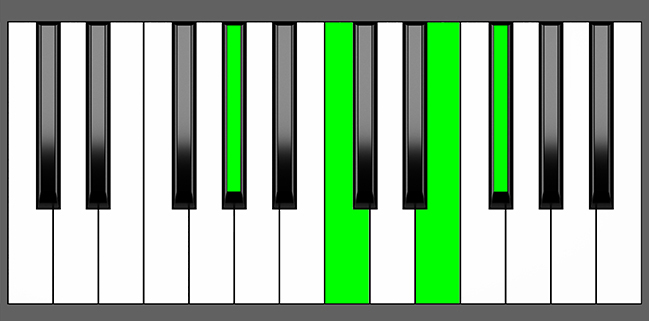
An Ab7#5 chord is an altered dominant seventh chord that is built upon the key of Ab. This chord consists of the root note Ab, the major third C, the augmented fifth E, and the minor seventh Gb. However, due to the dissonance created by the augmented triad, the Ab7#5 chord can be used as a substitute for dominant chords only in specific musical contexts. Another common use of this chord is as part of a modulation to or from an Ab7 chord. If you keep reading, you will learn more about the music theory that underpins this chord.
Structure of Ab7#5
Notes |
|---|
| Ab, C, E, Gb |
Intervals |
|---|
| R, 3, #5, m7 |
Fingers Position
Left Hand |
|---|
| 5, 3, 2, 1 |
Right Hand |
|---|
| 1, 2, 4, 5 |
How to play an Ab7#5
To play an Ab7#5 chord, you can use the following voicing: begin by playing the root note Ab with your left hand. Then, with your right hand, play the notes Gb (minor 7th), C (major 3rd), and E (sharp 5th).
Ab + Gb, C, E
This will result in a voicing of Ab7#5 that includes all notes: the root note, major 3rd, minor 7th, and sharp 5th.
Ab7#5 Chord Inversions
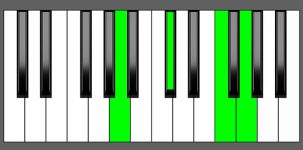
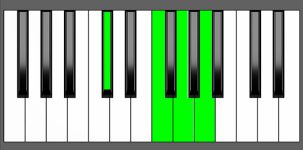
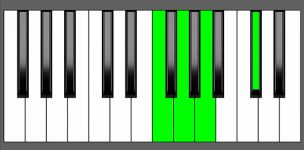
The Ab7#5 chord has a total of 3 inversions:
| Root Position: | Ab | C | E | Gb |
| 1st Inversion: | C | E | Gb | Ab |
| 2nd Inversion: | E | Gb | Ab | C |
| 3rd Inversion: | Gb | Ab | C | E |
Piano Keyboard Diagrams
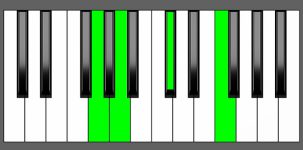
Chord Inversions on Piano
Understanding chord inversions is essential in music theory as it provides insights into how harmonies flow into one another. When playing altered chords like the Ab7#5 on a piano, it is crucial to realize that the fundamental block structures depicting the note order may not always be practically playable or musically pleasing.
To achieve professional-sounding voicings, you must distribute the notes across different octaves. Playing a sharp fifth directly next to a minor seventh in the lower register can sound extremely muddy. While basic inversion charts are mathematically correct, you should experiment with wide, two-handed voicings to discover the most efficient way to play the chord while maintaining its intended harmonic function.
Music Theory and Harmony of Ab7#5
Altered dominant chords like the Ab7#5 are frequently used as transitional devices to add an extra layer of tension to a standard dominant 7th chord, preparing the ear for a powerful resolution to the target chord. The Ab7#5 chord seamlessly substitutes the regular Ab7 chord, commonly appearing on the V degree, but also functioning on the III degree or serving as a secondary dominant to briefly shift the tonality.
Before examining the most practical and stylistic uses of this chord, let’s learn how to build it.
Building the Ab7#5 Chord: Different Approaches
Starting from the Ab Major Scale:
To form the Ab7#5 chord, you combine the root note Ab, the major 3rd C, the augmented 5th E, and the minor 7th Gb from the Ab scale.


To create the Ab7#5 chord from a scale, apply the formula R, 3, #5, m7 in the following manner:
- Begin with the root note, Ab.
- Select the major 3rd interval, which is C.
- Find the perfect 5th interval (Eb), then raise it by a half-step to get the augmented 5th: E.
- Finally, add the minor 7th interval, which is Gb.
By following this formula, you can construct a 7#5 chord starting from any root note.
by Combining Intervals:
Another practical method to create the 7#5 chord is by stacking specific intervals on top of each other.
Major 3rd + Major 3rd + Major 2nd = 7#5 Chord
For example, to build the Ab7#5 chord:
- Start with the root note Ab.
- Add a major 3rd interval (four half-steps up) to land on C.
- Stack another major 3rd interval on top of the C (four half-steps up) to get E.
- Finally, add a major 2nd interval (two half-steps up) from E to get Gb.
These stacked intervals perfectly map out the Ab7#5 chord.
How to Use Ab7#5 in a Chord Progression
The Ab7#5 is an incredibly versatile tool for reharmonization. Whenever you have a standard Ab7 chord resolving to a Db Major or Db minor chord, the Ab7#5 can be swapped in to drastically improve the voice leading. Because of the sharp fifth (E), the chord is non-diatonic to standard major or natural minor scales, acting as a borrowed chromatic color that creates intense forward motion.
Let’s break down its most effective and musically compelling uses across different key signatures, massively expanding on standard jazz and gospel cadences.
Most common uses of Ab7#5
Ab7#5 as the Dominant (V) in Db Major
In the key of Db Major, the standard dominant chord is Ab7. By substituting it with Ab7#5, the altered note (E) acts as a sharp passing tone that pulls chromatically upward, landing perfectly on the major third (F) of the target Db Maj7 chord.
| Major Scale | I | ii | iii | IV | V | vi | vii |
|---|---|---|---|---|---|---|---|
| Db | Db Maj7 | Eb min7 | F min7 | Gb Maj7 | Ab7 ⇒ Ab7#5 | Bb min7 | Cm7b5 |
- Substitute for the V chord to create an ascending chromatic resolution.
ii V I
| ii | V | I |
| Eb min7 | Ab7#5 | Db Maj7 |
This is the absolute standard jazz cadence. The sharp fifth (E) of the Ab7#5 resolves a half-step up into the F note of the Db Maj7, creating an incredibly satisfying and smooth release of tension.
I vi ii V
| I | vi | ii | V |
| Db Maj7 | Bb min7 | Eb min7 | Ab7#5 |
In this classic turnaround, the intense dissonance of the Ab7#5 acts as a massive slingshot at the end of the phrase, forcing the progression to aggressively loop back to the stable I chord.
I V/ii ii V
| I | V/ii | ii | V |
| Db Maj7 | Bb7#5 | Eb min7 | Ab7#5 |
By substituting the diatonic vi chord with a secondary dominant (Bb7#5), we create a chain of heavily altered falling fifths. The final dominant is the Ab7#5, perfectly preparing the listener for the definitive resolution home.
Line Cliché: V V V V I
| V | V | V | V | I |
| Ab7 | Ab7#5 | Ab13 | Ab7#5 | Db Maj7 |
Instead of moving the root of the chord, the fifth shifts chromatically up and down (Eb to E to F to E) over a static bass line, generating a beautiful internal melody before resolving.
Deceptive Cadence (Half-Step Up): ii V bVI
| ii | V | bVI |
| Eb min7 | Ab7#5 | Bbb Maj9 |
Instead of resolving to the tonic, the V chord slips up a half-step to the flat submediant. The E functions as the fifth of the Bbb chord (Fb), modulating with elegance while still starting from the dominant of Db.
Deceptive Cadence (Minor Third Down): V III
| V | III |
| Ab7#5 | F Maj7 |
Another surprise from the dominant seat: instead of landing on Db, the Ab7#5 leaps down to the mediant. The augmented fifth acts as a leading tone that lands smoothly on the F root.
Chain of Dominants: V/V/V V/V V I
| V/V/V | V/V | V | I |
| Bb7 | Eb7 | Ab7#5 | Db Maj7 |
A pure chain of dominants falling in fifths toward home. Each chord is the dominant of the next, and altering only the final link as an Ab7#5 saves the sharpest tension for the last moment, its raised fifth (E) climbing to the F of Db Maj7.
Ab7#5 as the Dominant (V) in Db minor
When resolving to a minor chord, the Ab7#5 is arguably at its most powerful. The augmented fifth (E) is enharmonically equivalent to Fb—which is exactly the minor third of the target Db min7 chord. This means the altered note doesn’t even need to move; it acts as a common tone, gluing the two chords together.
| Minor Scale | i | ii | III | iv | v | VI | VII |
|---|---|---|---|---|---|---|---|
| Db | Db min7 | Ebm7b5 | Fb Maj7 | Gb min7 | Ab min7 ⇒ Ab7 ⇒ Ab7#5 | Bbb Maj7 | Cb7 |
- Substitute for the V chord to seamlessly lock into the minor tonic.
iiø V i
| iiø | V | i |
| Ebm7b5 | Ab7#5 | Db min7 |
The dark, diminished color of the ii chord perfectly prepares the ear for the Ab7#5, which then effortlessly resolves into the melancholy Db min7 using the E as a stable anchor.
Minor Blues Turnaround: i iiø V i
| i | iiø | V | i |
| Db min7 | Ebm7b5 | Ab7#5 | Db min7 |
In the final cadence of a minor blues, swapping the standard dominant with the Ab7#5 highlights the dramatic, tense flavor of the harmonic minor scale right before returning to the top of the form.
Complex Resolution: ii V i
| ii | V | i |
| Eb min11 | Ab7#5 | Db min6/9 |
Resolving to a dense minor 6/9 chord creates a beautiful chiaroscuro effect typical of modal jazz, with the augmented fifth of the dominant chord sliding flawlessly into the minor third of the resolution.
Ab7#5 as Secondary Dominant (I7) in Ab Major
This is an incredibly fun approach often found in blues and gospel. In the key of Ab Major, you alter the home chord (Ab Maj7) into a dominant structure (Ab7#5). Because Ab is the V of Db, this treats the IV chord (Db Maj7) as the new temporary tonal center.
| Major Scale | I | ii | iii | IV | V | vi | vii |
|---|---|---|---|---|---|---|---|
| Ab | Ab Maj7 ⇒ Ab7 ⇒ Ab7#5 | Bb min7 | C min7 | Db Maj7 | Eb7 | F min7 | Gm7b5 |
- Substitute for the Tonic chord to act as a Secondary Dominant (V/IV).
I I7 IV iv
| I | I7 | IV | iv |
| Ab Maj7 | Ab7#5 | Db Maj7 | Db min7 |
A highly emotional sequence. We start securely on the major tonic, but morph it into the biting Ab7#5. The E pushes aggressively into the F of the Db Maj7, which is then beautifully darkened by a minor plagal cadence.
Blues Quick Change: I I7 IV
| I | I7 | IV |
| Ab7 | Ab7#5 | Db7 |
Used rhythmically in a blues progression, swapping the standard dominant with the Ab7#5 on the last beat before the change creates a fierce leading tone pulling toward the subdominant.
Ab7#5 as Secondary Dominant (VI7) in Cb Major
Substituting the diatonic minor vi chord with a dominant structure is a fundamental jazz reharmonization. In Cb Major, changing the Ab min7 to an Ab7#5 turns it into a secondary dominant targeting the ii degree.
| Major Scale | I | ii | iii | IV | V | vi | vii |
|---|---|---|---|---|---|---|---|
| Cb | Cb Maj7 | Db min7 | Eb min7 | Fb Maj7 | Gb7 | Ab min7 ⇒ Ab7 ⇒ Ab7#5 | Bb m7b5 |
- Substitute for the Submediant chord to target the ii degree.
Diminished Substitution: I VI7 ii
| I | VI7 | ii |
| Cb Maj7 | Ab7#5/C | Db min7 |
Using the Ab7#5 over the third in the bass (C) offers a modern, bright alternative to the traditional passing diminished chord (#Idim7), while sharing an almost identical ascending bass line.
Ab7#5 as a Tritone Substitution (subV) in G Major / G minor
A tritone substitution occurs when you replace a dominant 7th chord with another dominant 7th located exactly three whole steps (a tritone) away. In the key of G, the standard V chord is D7. The tritone substitution for D7 is Ab7.
By using the altered Ab7#5 instead of a plain Ab7, the voice leading becomes incredibly rich, as the chord slides chromatically downward into the G tonic.
| Major Scale | I | ii | iii | IV | V | vi | vii |
|---|---|---|---|---|---|---|---|
| G | G Maj7 | A min7 | B min7 | C Maj7 | D7 ⇒ Ab7#5 | E min7 | F#m7b5 |
- Substitute for the Dominant chord as a Tritone Substitution (subV) to target the tonic G.
ii subV I
| ii | subV | I |
| A min7 | Ab7#5 | G Maj7 |
An incredibly slick jazz resolution. The bass line steps down chromatically, while the sharp fifth of the Ab7#5 creates a suspenseful harmony that glides perfectly onto the G Major chord.
Advanced Reharmonizations with Ab7#5
The Ab7#5 chord excels in situations meant to surprise the listener. Whether moving in unexpected directions or participating in symmetrical cycles, its tense nature makes it a favorite among advanced players.
Coltrane Cycle: I bIII7 bVI VII7 III V7 I
| I | bIII7 | bVI | VII7 | III | V7 | I |
| Db Maj7 | Fb7#5 | Bbb Maj7 | C7#5 | F Maj7 | Ab7#5 | Db Maj7 |
Descending by major thirds, the Ab7#5 and its peers soften the brutal tonal shifts of Coltrane changes by utilizing the symmetry of their augmented triads to smooth out the voice leading.
Backdoor Progression: iv bVII7 I
| iv | bVII7 | I |
| Eb min7 | Ab7#5 | Bb Maj7 |
Acting as the bVII7 chord, the Ab7#5 creates a formidable chromatic grip where the sharp fifth (E) climbs gracefully to F, the fifth of the Bb Maj7.
Gospel Walk-Up: I III7 IV
| I | III7 | IV |
| Fb Maj7 | Ab7#5 | Bbb Maj9 |
A staple of Rhythm & Blues and Gospel playing. The Ab7#5 acts as a heavily altered secondary dominant to the IV chord, violently pushing the ear forward while the upper voices expand.
Constant Structure Pedal: V/II bVII/II V/II bIII/II
| V/II | bVII/II | V/II | bIII/II |
| Ab7#5/Eb | Cb7#5/Eb | Ab7#5/Eb | Fb7#5/Eb |
A brilliant funk and fusion trick. By moving the exact 7#5 block voicing parallel over a static bass note, the progression generates intensely modern poly-chordal tension without changing its aggressive intention.
Alternative Ab7#5 Nomenclature
- Ab 7+5
- Ab 7(#5)
- Ab aug7
- Lab 7#5
- Ab 7#5th
- Ab 7aug5
- Ab Dominant 7th #5
- Ab Dominant Seventh Sharp Fifth
Conclusion
The chord progressions and structural concepts presented in this post provide a vast and practical toolkit for deploying the Ab7#5 chord on the piano. By exploring its chromatic functions—whether the sharp fifth acts as a common tone, an ascending leading tone, or part of a tritone substitution—you unlock its true harmonic power.
While this guide covers the most effective scenarios across major, minor, gospel, and jazz contexts, modern harmony offers countless other pathways. Once you master inserting altered dominants into standard ii-V-I cadences and secondary dominant slots, continue expanding your vocabulary. Keep experimenting with the internal voice leading, trust your ears, and enjoy the rich tensions this chord brings to your arrangements.